
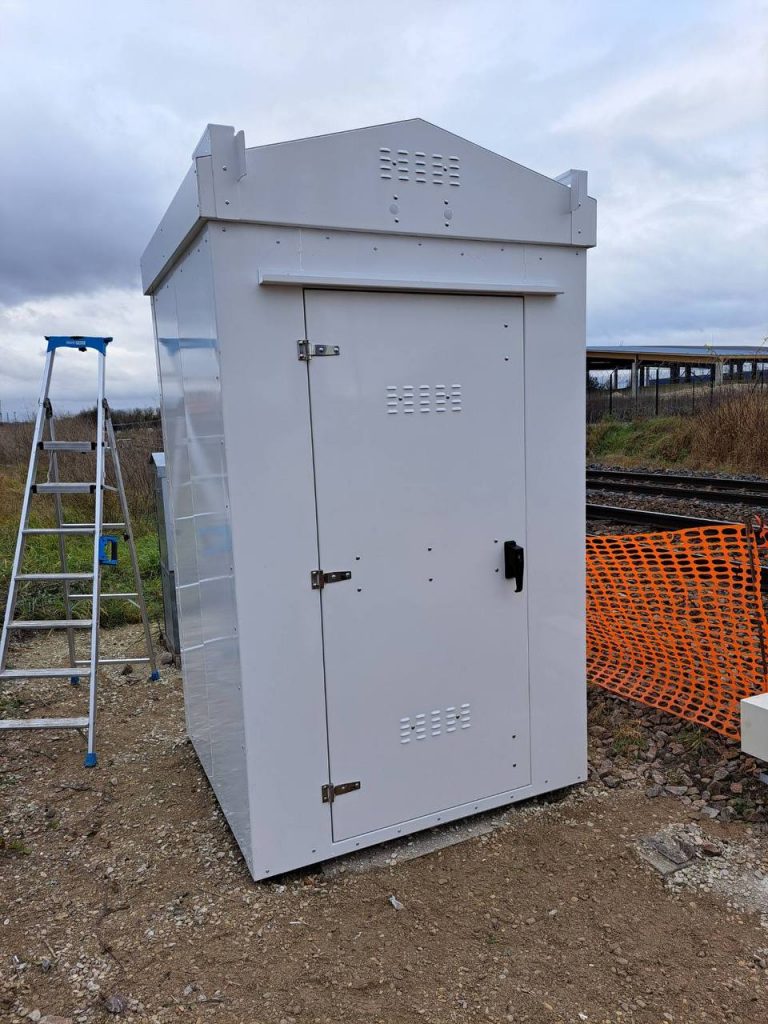

Modular Railway Cabinets UK are often chosen for one reason: flexibility. But “modular” only adds value when it is specified properly and matched to the site, the equipment layout, and the way the asset will be maintained and upgraded over time.
This article explains what modular cabinets mean in practical UK rail terms, how to specify them without leaving gaps, and how to avoid common mistakes that turn a modular concept into a complicated installation or an awkward maintenance problem.
What “modular” really means for UK rail cabinets
In trackside environments, modular cabinets typically refer to an enclosure system designed to be built up from sections or bays rather than a single fixed monolithic cabinet. The system may allow:
- Multiple cabinet bays joined together to increase capacity
- Separation of functions (power, control, telecom, interfaces) into dedicated compartments
- Future expansion by adding another bay or section
- Easier transport and handling compared with very large single enclosures
- Standardised internal frames or mounting patterns to speed up build and modifications
However, not every “large cabinet” is truly modular. A genuine modular system should be designed so that additions and changes do not compromise ingress protection, security, internal access, or maintainability.
For a broader overview of enclosure types and selection considerations, see the general Railway cabinets page on ALIAS Trading UK.
Why buyers choose Modular Railway Cabinets UK
A modular approach is usually driven by one or more practical pressures:
1) Capacity changes over time
Projects evolve. Additional interfaces, extra power distribution, new comms hardware, and revised layouts often appear after initial design. Modular cabinets can allow expansion without replacing the entire enclosure.
2) Separation of functions
Keeping different systems separate can support safer maintenance and cleaner internal layout. For example:
- Separating higher-power equipment from sensitive electronics
- Segregating telecom/data hardware from other assemblies
- Keeping battery/PSU areas distinct from control interfaces
3) Installation and handling constraints
Large single cabinets can be difficult to transport, position, and install—especially where access is restricted or lifting plans are complex. Modular sections can sometimes make logistics simpler.
4) Maintainability
In some cases, modular layouts provide better access by allowing clear “working zones” per compartment. But this only works if the layout is designed around maintenance, not just equipment fit.
The key question: modular for growth, or modular for segregation?
Before specifying anything, decide which of these you are really trying to achieve:
- Growth modularity: you expect the cabinet to expand in the future (extra bay, extra capacity).
- Segregation modularity: you want separate bays for different functions, even if the size doesn’t change.
This matters because the cabinet must be designed differently:
- Growth modularity needs planned interfaces for future joining, spare space, and spare cable entry capacity.
- Segregation modularity needs clear internal rules: cable routes, separation, access controls, and how interlinks pass between bays.
Specify the cabinet as a system, not a box
A common mistake is to specify “a modular cabinet” without defining what the modular system must do. A proper specification for Modular Railway Cabinets UK should include:
- Total required capacity now (equipment footprint and mounting method)
- Expected expansion scenario (what might be added later)
- Functional compartments/bays and what each one contains
- Cable entry approach per bay and how segregation is maintained
- Environmental exposure and whether the cabinet needs special protection
- Security/vandal risk level by site type
- Access and maintenance method: what a technician needs to reach and how often
If you want practical orientation around expectations in a Network Rail delivery environment, see the internal page on Meeting Network Rail standards (as a guidance reference, not a claim of approval).
Base, plinth, and joint interfaces: where modular systems succeed or fail
Modular cabinets introduce interfaces that a single cabinet doesn’t have:
- Bay-to-bay joining joints
- Shared base or separate bases per bay
- Internal cable transfer points between bays
- Alignment constraints across multiple doors and frames
If these interfaces are not designed properly, the cabinet will suffer from:
- Water tracking at joints
- Seal compression loss over time
- Misalignment that makes doors hard to close or locks unreliable
- Poor internal cable routing between bays
- Future expansion that becomes “impossible without major rework”
What to define in your specification
- Whether bays share one continuous base/plinth or separate base frames
- How bay joints maintain ingress protection
- How earthing/bonding is treated across bays (project-specific)
- Whether there is a dedicated interlink channel between bays
- What happens when an extra bay is added later (does the existing end panel become a joint?)
If waterproof resilience is a key concern in your environment, link internally to Waterproof cabinet considerations for additional guidance.
Cable entry and segregation in modular layouts
Cable entry can quickly become messy in multi-bay systems unless you define it early.
Practical decisions to make
- Does each bay have its own cable entry area, or is there a shared entry zone?
- How are power and data cables separated?
- How are cables routed between bays without compromising sealing?
- Is there spare entry capacity for future additions?
- Are gland plates pre-defined, or do they need flexibility on site?
A modular system should not rely on “site drilling” as the default strategy. If modifications are expected, the cabinet should be designed to accept them without undermining its protection.
Internal layout: how modular should improve maintainability
Modular cabinets can be easier to maintain if the layout is structured sensibly:
Good practice outcomes
- Each bay has a clear purpose (power bay, control bay, comms bay, interface bay)
- Cable routing is disciplined, with containment and tie points
- Service loops exist where needed, without creating a tangle
- Labels and identification are consistent across bays
- Spare space is allocated without blocking access
What often goes wrong
- Bays become “overflow space” with no logic
- Interlinks between bays become tangled and untraceable
- Equipment is installed too close to doors, restricting access
- Access panels or containment blocks future expansion
If a modular system is being selected partly for maintainability, require the supplier to propose an internal layout approach and leave structured spare capacity.
Condensation and thermal behaviour across multiple bays
Adding bays changes airflow, moisture behaviour, and thermal stability.
Condensation risk
A larger enclosure system can:
- Create cold zones in less-heated bays
- Increase humidity cycling if not managed properly
- Encourage moisture accumulation in unused or “spare” compartments
Thermal risk
If heat-generating equipment is concentrated in one bay, that bay may need:
- Improved ventilation strategy
- Anti-condensation measures tailored to heat and seasonal change
- A layout that avoids hot spots and restricted airflow
The right approach depends on equipment heat load and site exposure. If you don’t have exact wattage, provide an estimate and make it explicit.
Security and vandal resistance in modular cabinets
Modular cabinets often have more doors, more locks, and more joints. That can increase risk if not designed properly.
Consider:
- Whether all bays need the same lock level, or if certain bays should be more restricted
- How door structures resist prying and forced entry
- Whether hinges and lock areas are protected
- Whether any external joint interfaces create weak points
If vandal resistance is a priority, you can reference internal guidance on Anti-vandal railway cabinet measures (again: practical guidance, not a claim of universal suitability).
Installation constraints: modular doesn’t automatically mean “easier”
Some teams assume modular systems are easier to install. Sometimes they are—but sometimes they introduce new complexity:
Potential benefits
- Easier transport of smaller sections
- Reduced lift weight per unit
- Ability to stage installation (base first, bays later)
Potential complications
- More alignment steps and joint assembly on site
- More sealing points to get right
- More time joining and testing interfaces
- More internal interlink work between bays
A good modular cabinet system should come with a clear installation method: how bays are joined, how sealing is confirmed, and how interlinks are routed.
If installation planning support is needed, link internally to Railway cabinet installation services UK.
Future expansion: the part most people forget to specify
The whole value of Modular Railway Cabinets UK is future adaptability. But future expansion only works if it is planned.
Define your expansion scenario
- How many bays might be added (one extra bay, two, unknown)?
- Will the new bay need to be joined to the side, or could it be added at the end?
- Will the existing end panel be removed later?
- Are spare duct routes available for additional cables?
- Is spare base footprint allowed at the site?
Design for expansion without disruption
The cabinet system should allow an additional bay to be added with:
- Minimal downtime
- Minimal drilling or sealing compromise
- A clear interlink route
- No need to dismantle critical internal assemblies
If these points aren’t addressed early, “future expansion” becomes a sales phrase rather than a real asset strategy.
Common mistakes when buying Modular Railway Cabinets UK
1) Not defining what “modular” is supposed to achieve
Modular for growth and modular for segregation are different needs.
2) No plan for the joining interface
Joints are where water, corrosion, and misalignment issues appear.
3) Cable entry is left to the site team
That usually means late changes, compromised sealing, and untidy routes.
4) Spare capacity is “assumed”
If you don’t specify spare space, spare containment, and spare entries, you rarely get them.
5) Maintenance access is not considered bay-by-bay
A modular system can be harder to maintain if access is tight across multiple doors.
6) Security is treated as “one lock fits all”
Different bays may need different access expectations, but the overall system must remain robust.
What information to prepare before speaking to a supplier
To get a good modular proposal quickly, prepare:
- Equipment list (or at least functions) and preferred mounting approach
- Total space required now, plus expected growth
- Whether you want segregation by bay (power/comms/control)
- Site constraints: footprint, height, door swing, working space
- Cable entry requirements and segregation rules
- Environmental exposure notes (standing water, coastal risk, public access risk)
- Any maintenance expectations (frequency, access rules, filter servicing if used)
- Timeline and whether installation support is needed
Practical Checklist
Use this before issuing requirements for Modular Railway Cabinets UK:
- Define modular purpose: growth, segregation, or both
- Specify number of bays now and likely future expansion scenario
- Define bay functions and what goes in each one
- Confirm base/plinth strategy and how joints maintain sealing
- Define cable entry per bay and cable routing between bays
- Include condensation control requirements, especially for “spare” bays
- Estimate thermal load and note sun exposure
- Confirm access constraints: door swing, working clearance, safe approach
- Define security level appropriate to site risk
- Require practical documentation: dimensions, joining method, entry details, layout guidance
FAQ: Modular Railway Cabinets UK
What are Modular Railway Cabinets UK?
Modular Railway Cabinets UK are enclosure systems built from multiple sections or bays, allowing functional separation and, in many cases, future expansion without replacing the entire cabinet.
When should I choose Modular Railway Cabinets UK instead of a single cabinet?
Choose Modular Railway Cabinets UK when capacity may grow, when functional segregation is important, or when transport/handling constraints make a single large cabinet impractical.
Can Modular Railway Cabinets UK be expanded later?
Yes, but only if expansion is designed in from the start. You need a plan for joining interfaces, spare cable entry capacity, and site footprint allowance.
Do modular cabinets increase water ingress risk?
They can, because joints and interfaces introduce extra sealing points. A good modular design maintains ingress protection across bay joints and base interfaces.
How do I manage cables between bays in Modular Railway Cabinets UK?
Define a dedicated interlink route or cable channel between bays, and specify segregation rules (power vs data) to avoid messy routes that compromise maintainability.
Are Modular Railway Cabinets UK easier to install?
Sometimes. Smaller sections can simplify logistics, but modular systems can add alignment and joint assembly steps. Installation method and sealing verification matter.
How do I keep Modular Railway Cabinets UK maintainable?
Assign each bay a clear function, enforce structured cable containment, preserve access clearance, and include spare capacity without blocking working space.
Can ALIAS Trading UK help specify Modular Railway Cabinets UK?
ALIAS Trading UK can support specification and planning for Modular Railway Cabinets UK by helping define bay functions, access constraints, cable entry strategy, and installation realities.