
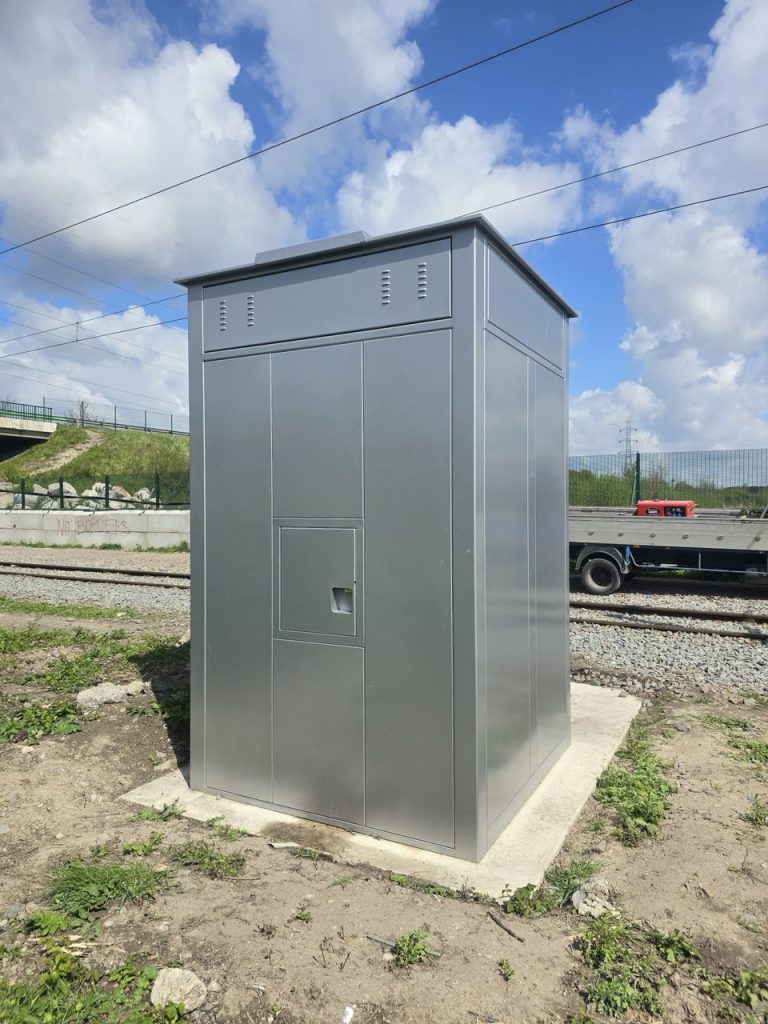

Railway Cabinet Installation Services UK work is often judged by what happens months after installation, not on the day the cabinet is placed. A cabinet that looks correct at handover can still become a maintenance problem if the base interface encourages water tracking, if cable entry is improvised, if access clearance is too tight, or if documentation is incomplete.
This article explains the practical steps that make cabinet installation succeed in UK rail environments. It focuses on what should be planned before arriving on site, what must be controlled during installation, and what good handover evidence should look like.
For an overview of enclosure categories before installation planning, see Railway cabinets on ALIAS Trading UK.
What “cabinet installation services” typically include
Railway cabinet installation is more than placing a cabinet on a base. Depending on project scope and responsibilities, installation services can involve:
- Site surveys and installation planning inputs
- Base/plinth coordination and interface definition
- Positioning and fixing of cabinets
- Cable entry preparation and gland plate work
- Internal mounting and layout setup (scope dependent)
- Alignment, sealing, and closure verification
- Labelling and identification checks
- Handover documentation and evidence capture
Responsibilities vary by contract and client requirements, so the installation approach should be defined clearly at the start.
Why cabinet installations fail (and why rework is so common)
Rework is usually caused by predictable issues:
- Base height or footprint mismatch with the cabinet interface
- Duct alignment errors that force late drilling or awkward cable routes
- Cable entry details not defined early enough
- Door swing and access clearance not checked properly
- Cabinet alignment issues causing seal gaps and water tracking risk
- Poor drainage around the base leading to standing water exposure
- Missing handover evidence and unclear “as installed” details
The good news is that most of these problems are preventable with a structured installation plan.
Step 1: Confirm site constraints before anything is delivered
Before cabinets arrive on site, confirm:
Access and logistics
- How the cabinet and base will be delivered to the location
- Lifting requirements and positioning constraints
- Safe route for handling and equipment access
- Storage conditions if items arrive before installation
Space and footprint
- Available footprint including working clearance
- Cabinet door swing zone and technician working space
- Height restrictions due to structures or route constraints
- Proximity to other assets affecting access and safety
Drainage and ground conditions
- Whether water pooling is expected around the cabinet location
- Ground falls and drainage routes
- Whether vegetation or debris accumulation is likely
These checks prevent the common situation where a cabinet physically fits the footprint but cannot be serviced safely.
Step 2: Get the base and plinth interface right
The base interface is one of the most common sources of long-term problems.
What needs to be defined
- Base type and dimensions (project-specific)
- Cabinet fixing points and alignment tolerances
- Plinth-to-cabinet sealing approach
- Cable entry position relative to ducts and internal gland plates
- How the base prevents water tracking into the cabinet
- Final cabinet orientation and door opening direction
If the cabinet is installed onto a base that was not coordinated with cable entry, installers are often forced into late modifications that increase ingress risk.
If waterproof resilience is a key concern, reference the internal guide: Waterproof cabinet considerations.
Step 3: Control duct alignment and cable entry from the start
Cable entry is one of the most important installation elements, and one of the easiest to get wrong if left late.
Practical cable entry decisions
- Bottom entry, rear entry, side entry, or mixed
- Number of ducts and their positions
- Gland sizes and spare capacity
- Segregation requirements (power vs data, or other groups)
- Whether gland plates are removable/configurable
- How unused entries will be sealed and controlled
Late drilling and improvised entry work frequently lead to leaks, poor cable management, and future maintenance headaches.
Step 4: Positioning and alignment matter more than people think
Cabinet alignment affects:
- Door closure quality
- Seal compression consistency
- Lock engagement
- Long-term ingress protection performance
- Whether the cabinet “twists” over time due to foundation issues
During installation, ensure:
- The cabinet is level and correctly seated
- Fixings are applied as intended and not forcing distortion
- Door alignment and closure is checked before final sign-off
- Cable routing does not obstruct door closure or compress seals
Misalignment is a common hidden cause of later water ingress issues, even when seals appear fine on day one.
Step 5: Verify sealing and closure before calling it complete
A cabinet can look correct and still leak if:
- Seals are damaged during handling
- Cable glands are not installed correctly
- Unused penetrations are left open
- Door latching is uneven
Practical verification should include:
- Seal inspection for damage and correct seating
- Confirmation of even door closure and latch engagement
- Checks that all glands are tightened and correctly fitted
- Confirmation that unused entries are sealed
- Visual checks for cable tracking paths into the enclosure
This step is crucial for long-term reliability.
Step 6: Internal layout and “as installed” condition
Even where internal wiring is not part of the installation scope, installation teams often influence internal condition through cable entry, containment, and mounting approach.
Good practice includes:
- Clean cable routing into the cabinet with strain relief
- Segregation maintained if required
- Enough service loop to support future work without clutter
- Label visibility maintained (not hidden behind cable bundles)
- Internal fixings checked and secured
A tidy internal layout reduces fault response time and reduces accidental damage during future work.
Step 7: Security and vandal exposure checks
Security risk varies by site type. Installation should confirm:
- Locks function correctly and close smoothly
- Door and hinge alignment supports long-term integrity
- External fixings are secure and tamper resistant where required
- Vulnerable external components are protected as designed
If vandal risk is relevant, reference internal guidance: Anti-vandal measures for modern rail infrastructure.
Step 8: Handover evidence and documentation
Good handover evidence prevents disputes and helps maintenance teams later.
A practical handover pack often includes:
- As-installed photos: cabinet position, base interface, cable entry, internal view
- Confirmation of cabinet orientation and identification labels
- Notes on cable entry arrangement and any spare capacity
- Record of any site modifications (if unavoidable)
- Basic check record for door closure, seals, glands, and unused entries
- Any O&M notes for heaters, vents, or filters (if fitted)
If your delivery environment is influenced by Network Rail-type expectations, it helps to keep documentation structured and traceable. The ALIAS Trading UK guidance page Meeting Network Rail standards can be used as an internal orientation reference.
Common mistakes in Railway Cabinet Installation Services UK projects
1) Treating base installation and cabinet installation as separate worlds
They must be coordinated, especially for cable entry and sealing.
2) Not checking door swing and working clearance
A cabinet that cannot be serviced safely becomes a long-term cost.
3) Leaving cable entry decisions too late
Late drilling increases leak risk and reduces maintainability.
4) Assuming “level enough” is acceptable
Small alignment issues create seal and lock problems over time.
5) Skipping structured handover evidence
If issues appear later, missing evidence makes resolution harder.
6) No plan for future expansion or modifications
Spare entry capacity and clear cable routes reduce future disruption.
What to prepare before you book installation
To make installation efficient and reliable, prepare:
- Site location details and access constraints
- Footprint and clearance requirements (door swing, technician working space)
- Base/plinth design and interface assumptions
- Duct positions, sizes, and cable entry plan
- Equipment list and any heat/condensation control needs
- Security risk level and any required protective measures
- Documentation expectations for handover pack
- Timeline constraints and whether possession windows affect working method
The better the plan, the fewer problems occur on the day.
Practical Checklist
Use this checklist to manage Railway Cabinet Installation Services UK planning and delivery:
- Confirm site access, logistics, and lifting approach
- Confirm footprint, height, and door swing clearance
- Validate drainage and standing water risk
- Coordinate base/plinth dimensions and fixing points
- Confirm duct alignment and cable entry strategy
- Ensure cabinet alignment is level and undistorted
- Verify seals, glands, unused entries, and door closure
- Confirm internal cable routing does not obstruct closure
- Check locks and security features function correctly
- Produce a structured handover pack with photos and key notes
FAQ: Railway Cabinet Installation Services UK
What do Railway Cabinet Installation Services UK typically include?
Railway Cabinet Installation Services UK can include site surveys, base interface coordination, cabinet placement and fixing, cable entry preparation, sealing checks, and handover documentation, depending on project scope.
What causes the most rework in cabinet installations?
Common causes are base mismatch, duct misalignment, late cable entry decisions, poor cabinet alignment, and incomplete sealing verification.
Why is the base interface so important?
The base/plinth interface is a common source of water tracking and long-term ingress risk. Poor drainage and sealing details at the base often lead to faults later.
How can I reduce water ingress risk during installation?
Control cable entry design, ensure glands are installed correctly, seal unused entries, verify door seal condition and closure alignment, and confirm the base interface discourages water pooling.
How do I ensure the cabinet is maintainable after installation?
Confirm door swing and working clearance, keep internal cable routing disciplined, preserve access to equipment, and ensure labels remain readable.
What should be included in a handover pack?
A good handover pack includes as-installed photos, cabinet identification details, cable entry notes, sealing checks, and records of any site modifications and installed components.
Can ALIAS Trading UK support Railway Cabinet Installation Services UK planning?
ALIAS Trading UK can support planning and delivery for Railway Cabinet Installation Services UK by helping define base interfaces, cable entry strategy, access constraints, sealing verification, and structured handover evidence.
Conclusion
Railway Cabinet Installation Services UK succeed when installation is treated as a controlled engineering process: site constraints confirmed early, base and duct interfaces coordinated, cable entry designed rather than improvised, alignment and sealing verified, and handover evidence captured properly.
If you want support planning an installation or structuring a reliable handover approach, ALIAS Trading UK can help define practical requirements and reduce avoidable rework on UK rail projects.