
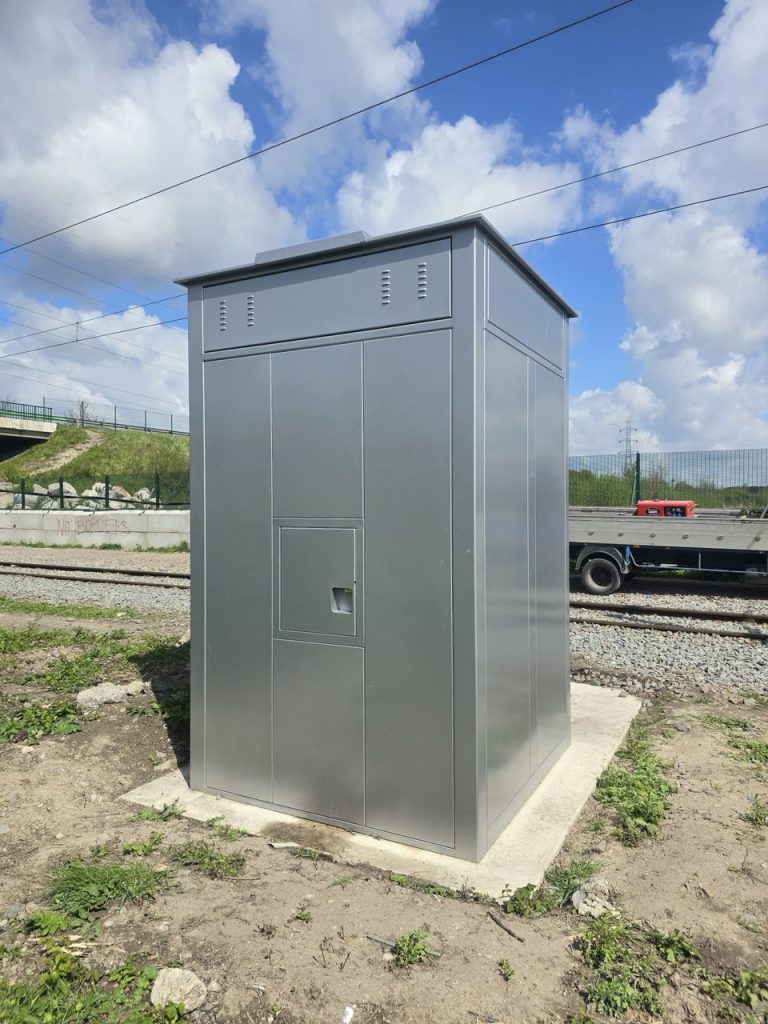

Anti Vandal Railway Cabinets UK requirements are rarely about making a cabinet “indestructible.” They are about reducing opportunity, slowing down common attack methods, preventing quick forced entry, and ensuring the cabinet remains sealed and serviceable after years of exposure and repeated use.
Trackside cabinets are often installed in visible, accessible locations. In higher-risk areas, vandalism and tampering can lead to equipment damage, safety risk, service disruption, and repeat call-outs. The right anti-vandal approach combines cabinet design, lock and hinge strategy, siting decisions, and a realistic maintenance plan.
For a broader overview of enclosure types and selection context, see Railway cabinets on ALIAS Trading UK.
What “anti-vandal” should mean in a UK rail context
Anti-vandal design for rail cabinets typically aims to:
- Prevent quick access using simple tools
- Resist common attacks such as prying, levering, and lock tampering
- Protect sealing integrity so vandal attempts do not create ongoing water ingress
- Reduce visible weak points that invite attack
- Support secure maintenance without creating unsafe complexity
- Match protection level to risk (avoid over-specifying everywhere)
A cabinet can be “strong” but still vulnerable if the weak points are obvious: exposed hinges, easily attacked locks, thin door edges, or fixings that can be removed quickly.
Understand the risk: not all sites need the same protection
Anti-vandal requirements should be driven by where the cabinet is installed:
Higher-risk locations often include
- Public footpaths and station-adjacent assets
- Bridges, underpasses, and accessible trackside boundaries
- Urban areas with higher visibility and repeat exposure
- Known hotspots where previous damage has occurred
Lower-risk locations may include
- Remote route assets with limited public access
- Areas with natural barriers or controlled access
- Sites where vandal history is low
If you treat every site as “maximum threat,” cost increases quickly and lead times can worsen. If you under-specify in a hotspot, you pay repeatedly in damage and fault response.
The usual attack methods on trackside cabinets
Anti-vandal design should focus on the attacks that happen most often:
- Prying/levering doors at the edge or lock side
- Attacking the lock (pulling, drilling, twisting, snapping, or forcing)
- Hinge attacks if hinges are exposed and accessible
- Removing external fixings on vents, covers, or accessories
- Impact damage (kicking, blunt force, thrown objects)
- Tampering with external penetrations (cable entries, vents, drain points)
Designing against these behaviours is more useful than generic “heavy duty” language.
Door strength: the main battleground
Most forced entry attempts target the door.
Anti-vandal door design considerations:
- Door stiffness to resist flexing when levered
- Strong door edges and frame engagement
- Multiple locking points (where appropriate) to distribute closure load
- A design that prevents door “peel back” under prying force
- Door geometry that reduces tool purchase points
Importantly, the door system must still close and seal properly over time. A door that becomes misaligned after minor impact may still lock but lose sealing integrity, causing long-term water ingress problems.
If waterproof resilience is also important, link internally to Waterproof cabinet railways UK because vandal damage and water ingress are often connected.
Locks: focus on protection, not just the lock type
The lock is a common target, but the lock area around it is just as important.
Anti-vandal lock strategy often includes:
- Protected lock housings to prevent direct tool access
- Designs that resist pulling or twisting forces
- Avoiding exposed lock barrels that invite attack
- Lock placement that reduces leverage opportunities
- Consistent access control approach (who has keys, how managed)
A high-spec lock can still fail if it is exposed and easy to attack. Conversely, a well-protected lock area can significantly improve resistance even without exotic hardware.
Hinges: exposed hinges are a common weakness
If hinges are accessible, they can be attacked or used as leverage points.
Anti-vandal hinge approaches may include:
- Concealed hinge designs, or protected hinges
- Hinge arrangements that maintain alignment after repeated use
- Robust hinge mounting that resists loosening over time
- Protection against hinge pin tampering where relevant
Hinge quality also influences sealing performance. If hinges loosen and the door drops over time, seals lose compression and the cabinet can start to leak.
Fixings and external components: remove easy targets
Cabinets often have external items that become attack points:
- Vents and covers
- External cable entry covers
- Nameplates and identification plates
- Padlock points or external hasps (where used)
Anti-vandal specification should consider:
- Anti-tamper fixings for external components
- Recessed or protected accessories
- Minimising unnecessary external protrusions
- Ensuring any vents or openings are protected from direct attack
If ventilation is required, it should be designed to resist tampering and avoid becoming a quick entry path.
Cabinet placement: anti-vandal design starts with siting
Where and how the cabinet is installed can reduce vandal risk significantly.
Practical siting considerations:
- Avoiding highly visible “inviting” positions where possible
- Orientation that reduces exposure of lock side to public approach
- Keeping sufficient space for safe maintenance without creating hidden corners
- Avoiding placing cabinets directly next to climbable structures
- Using barriers, fencing, or deterrent measures where project scope allows
Siting decisions can often reduce vandal risk more cheaply than heavy cabinet upgrades.
Cable entry and base interfaces: protect against tampering and water tracking
Cable entry and base zones can be attacked or disturbed. They are also common water ingress routes.
Anti-vandal + waterproofing overlap:
- Protect cable entry points from direct access where feasible
- Avoid exposed gland areas that can be loosened easily
- Ensure base/plinth interfaces do not allow tool access into the cabinet
- Maintain sealing discipline for any modifications
Installation quality matters here. If base and duct alignment is poor, installers may improvise, leaving vulnerabilities. For practical planning context, link internally to Railway cabinet installation services UK.
Maintainability: anti-vandal must not create maintenance problems
It’s easy to overcomplicate security and accidentally make maintenance unsafe or slow.
Good anti-vandal solutions should:
- Allow authorised access without excessive steps
- Maintain clear internal access and working space
- Avoid security features that damage seals during normal use
- Keep labeling and identification readable and durable
- Support inspection of locks, hinges, and seals as part of routine maintenance
If security features make access too hard, technicians may use workarounds that degrade the cabinet over time.
Verification: how to check anti-vandal readiness at handover
At installation/handover, confirm:
- Doors close smoothly and evenly with correct seal compression
- Locks engage properly without forcing
- Hinges are aligned and secured
- External components are fixed with appropriate anti-tamper measures
- Cable entry and base zones are protected and sealed correctly
- There are no obvious leverage points created by installation alignment issues
A cabinet that is distorted at installation will be more vulnerable to attack and more likely to lose sealing integrity.
Common mistakes when specifying Anti Vandal Railway Cabinets UK
1) Over-specifying everywhere
Not all sites need the same security level. Match protection to risk.
2) Focusing only on lock brand/type
Lock protection design and door structure matter as much as the lock.
3) Ignoring hinges and alignment
A strong lock doesn’t help if hinges can be attacked or the door flexes.
4) Adding external hasps and padlocks without protection
External padlock points can become easy tool targets if not protected.
5) Creating security features that harm maintainability
If access becomes difficult, maintenance behaviour will degrade the cabinet over time.
6) Forgetting the waterproofing link
Vandal attempts often damage seals and create long-term ingress risk.
What to prepare before speaking to a supplier
To specify anti-vandal cabinets properly, prepare:
- Site risk profile: public access, visibility, known vandal history
- Cabinet location constraints and orientation options
- Any requirements for access control (keys, authorised roles)
- Whether additional barriers or siting measures are possible
- Any known failure history (door prying, lock attacks, hinge damage)
- Maintenance expectations: how often cabinets are accessed and by whom
- Cable entry approach and base interface assumptions
Clear risk information allows the supplier to propose the right level of protection without unnecessary cost.
Practical Checklist
Use this checklist for Anti Vandal Railway Cabinets UK specifications:
- Confirm site vandal/tamper risk level and access profile
- Specify door stiffness and frame engagement to resist prying
- Define lock protection strategy (protected lock area, reduced tool access)
- Specify hinge protection and long-term alignment requirements
- Require anti-tamper fixings for external components
- Consider siting and orientation to reduce exposure and opportunity
- Protect cable entry and base zones from tampering and water tracking
- Ensure security features do not compromise maintainability
- Verify closure, alignment, and sealing at handover
- Include routine inspection checks for locks, hinges, and seals
FAQ: Anti Vandal Railway Cabinets UK
What are Anti Vandal Railway Cabinets UK designed to prevent?
Anti Vandal Railway Cabinets UK are designed to reduce the chance of forced entry and tampering by resisting common attacks such as prying doors, attacking locks, and damaging hinges or external components.
Is a stronger lock enough for Anti Vandal Railway Cabinets UK?
Not usually. The lock area needs protection, and the door and frame must resist levering. Hinges, alignment, and fixings also matter.
How do I decide the right security level?
Base it on site risk: public access, visibility, history of vandalism, and the criticality of the equipment. Over-specifying everywhere increases cost unnecessarily.
Do anti-vandal features affect waterproofing?
Yes. Forced entry attempts can distort doors and damage seals, leading to water ingress. Anti-vandal design should protect sealing integrity, not just prevent access.
What installation issues make cabinets more vulnerable?
Misalignment, distorted fixing, poor base interface, and exposed cable entry zones can create leverage points and weak sealing, increasing vulnerability to attack.
Can siting reduce vandal risk?
Yes. Orientation, visibility management, and avoiding easy public approach can reduce risk significantly, sometimes more effectively than heavier cabinet upgrades.
Can ALIAS Trading UK help with Anti Vandal Railway Cabinets UK selection?
ALIAS Trading UK can support selection and planning for Anti Vandal Railway Cabinets UK by helping assess site risk, define practical security measures, and ensure installation planning protects long-term sealing and maintainability.
Conclusion
Anti Vandal Railway Cabinets UK performance comes from addressing real attack methods: door prying, lock tampering, hinge attacks, and removal of external components — while preserving sealing integrity and maintainability. The best outcome is achieved by matching security level to site risk, specifying protection where it matters most, and ensuring installation alignment and documentation support long-term performance.
If you want support defining anti-vandal requirements or planning installation constraints for high-risk sites, ALIAS Trading UK can help structure a practical specification that balances security, waterproof integrity, and long-term maintainability.