
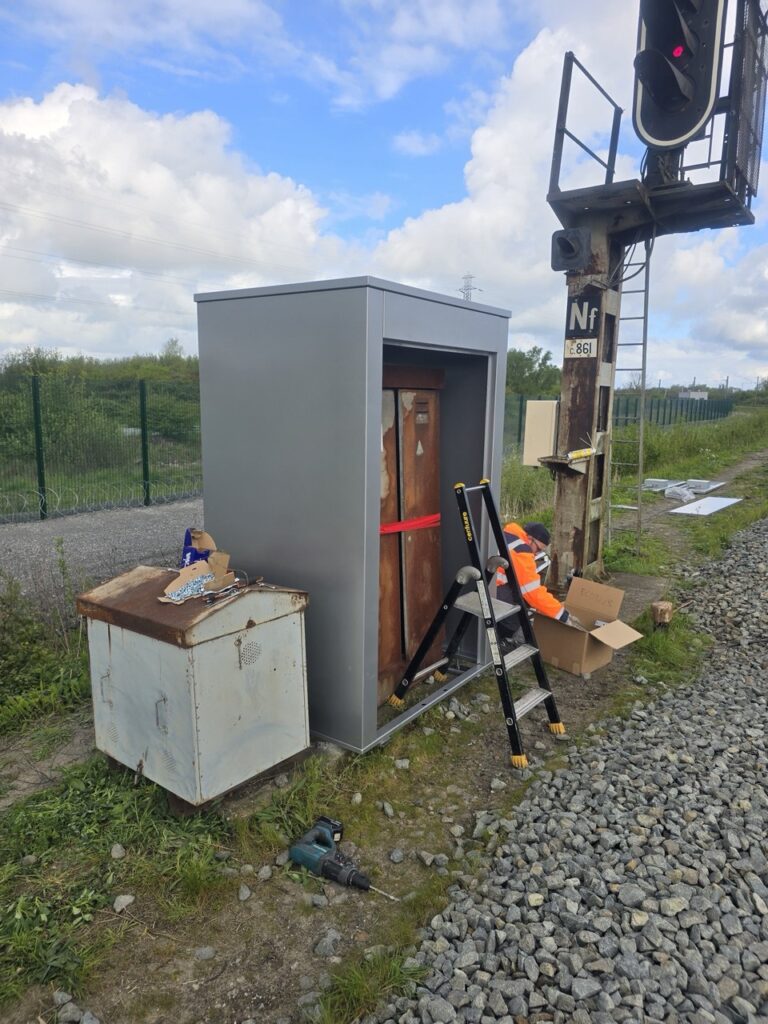

Railway Telecom Cabinets UK projects succeed or fail on details that are easy to miss at the desk but impossible to ignore trackside: water ingress, condensation, access constraints, vandal exposure, cable management, and maintainability over years of service.
This guide is written for UK rail buyers, project engineers, and delivery teams who need a practical way to specify and select telecom cabinets (and avoid costly rework). It focuses on what matters in real conditions, how to define requirements clearly, and what information a supplier needs to deliver the right solution first time.
What “railway telecom cabinets” cover in UK rail environments
Telecom cabinets in the rail environment are used to house and protect a wide range of communications and data infrastructure. Depending on the route and asset strategy, that may include:
- Fibre termination and distribution hardware
- Copper interfaces and legacy telecom equipment
- Communications nodes for signalling interfaces, control systems, or SCADA-type links
- Power distribution and backup arrangements for telecom assets
- Network hardware (switches, routers, media converters)
- CCTV, passenger information, public address interfaces (where applicable)
- Radio and communications equipment (subject to the specific system in use)
The common requirement is the same: keep equipment secure, dry, stable in temperature and humidity as far as practical, and accessible for safe maintenance.
Why telecom cabinets fail early (and how to prevent it)
Early failure is rarely caused by the cabinet “looking wrong” on delivery. It is usually caused by one of these issues:
- Condensation and humidity cycling damaging electronics and terminations
- Water ingress through cable entry points, door seals, or base interfaces
- Poor thermal control leading to overheating in summer, and damp in winter
- Inadequate security (forced entry, vandal damage, or tampering)
- Bad maintainability (no working room, awkward rack access, messy cabling)
- Incomplete specification (supplier forced to guess, leading to mismatched build)
The cure is disciplined specification: define the environment, define the equipment and heat load, define access constraints, define cable entry and gland strategy, and define maintenance expectations.
Start with the environment, not the cabinet shape
A telecom cabinet specification should begin with the environment it must survive:
External exposure
- Trackside weather: wind-driven rain, freeze/thaw cycles, and UV exposure
- Local drainage conditions: standing water risk around the base
- Splash zones and ballast dust contamination
- Proximity to vegetation (biological contamination, blocked vents, rodent risk)
Corrosion and contamination
- Coastal or industrial environments increase corrosion risk
- Trackside dust and brake debris can settle into vents and seals
- Salt-laden air accelerates deterioration on poorly protected metalwork
Vandal and tampering risk
- High-footfall public areas vs remote route assets (risk profile differs)
- Likely attack methods: prying doors, drill damage, attempted lock defeat
- Need for concealment, anti-tamper fixings, and stronger door structures
If you don’t define the environment, suppliers must assume a generic case. That is how you end up with cabinets that look fine but age badly.
Materials and construction choices that matter
For telecom cabinets, material selection affects corrosion resistance, maintenance burden, and long-term reliability.
Common material approaches
- GRP / composite: strong corrosion resistance, electrically insulating, often good for harsh outdoor conditions when designed properly.
- Metallic enclosures (steel/stainless/aluminium variants): robust and widely used, but the corrosion protection system, coatings, and fixing details become critical.
There is no single “best” material without context. What matters is whether the construction is appropriate for the exposure, whether joints and penetrations are well designed, and whether the cabinet remains maintainable after years outside.
Build details that separate “good” from “problem”
- Door stiffness and hinge quality (reduces seal compression loss over time)
- Continuous, durable door seals (and correct compression)
- Internal mounting approach: backplates, rack frames, DIN rails, and cable management
- Protected fixings and interfaces that do not become corrosion points
- Base and plinth interfaces designed to avoid water tracking into the enclosure
If you want a broader overview of cabinet types and typical use cases, link it internally to the general cabinet page: Railway cabinets on ALIAS Trading UK.
Ingress protection, seals, and the reality of cable entry
For telecom equipment, water ingress and damp are two of the most common causes of faults. Your specification should treat cable entry as a designed system, not an afterthought.
Cable entry strategy
Decide early:
- Bottom entry, rear entry, side entry, or mixed
- Gland plates vs pre-drilled entries
- Number of entries, sizes, and reserved spare capacity
- Separation requirements for power vs data
- Bend radius management and strain relief
Cable entry is also where many “IP-rated” enclosures lose their protection. If glands are not installed correctly, if unused entries are not sealed properly, or if the base interface is poor, the rating on paper won’t match performance on site.
For cabinet selection that prioritises resistance to water exposure, it can help to reference your internal waterproof guide page: Waterproof cabinet considerations.
Condensation control: the biggest hidden risk in telecom cabinets
Even when a cabinet is technically “watertight,” humidity can still destroy telecom hardware. Trackside cabinets breathe: temperature changes draw moist air in and out, leading to condensation on cold surfaces.
Practical approaches (chosen by needs, not habit)
- Heaters / anti-condensation devices: stabilise internal temperature and reduce condensation risk in cold/wet periods
- Ventilation (passive or filtered): helps equalise temperature and reduce moisture, but must be designed to avoid water/dust ingress
- Heat exchangers or forced ventilation: useful for higher heat loads, but require correct filtering and maintenance planning
- Desiccants: limited role as a supplementary measure, not a primary strategy
The right approach depends on:
- Expected heat load (network switches, converters, PSUs)
- Cabinet volume and internal layout
- Site exposure (shade vs direct sun, wind vs sheltered)
- Maintenance regime (filters require inspection and replacement)
If your cabinet design and installation planning includes these controls from day one, you avoid the common pattern of “retrofit fixes” after faults.
Thermal management: define the heat load properly
Telecom hardware generates heat, and overheating can cause instability, premature component ageing, or outright failures.
To specify thermal performance, you need:
- Equipment list with power consumption (typical and worst case)
- Any battery charging or PSU heat output
- Expected ambient temperature range at the site
- Whether the cabinet receives direct sun for long periods
- Internal layout constraints (hot spots in upper sections)
Suppliers can then propose a realistic thermal control approach rather than guesswork. If you cannot provide exact wattage, provide an estimate with a margin and make it explicit.
Internal layout: practical maintainability beats “nice drawings”
A telecom cabinet should be built around maintainability:
Good layout principles
- Clear separation of power distribution and data/telecom sections where needed
- Logical cable routing paths with accessible containment
- Spare space and spare containment for future additions
- Service loops where appropriate (without turning into cable chaos)
- Labels and identification that remain readable after years
Rack vs backplate vs hybrid
- Rack-mounted equipment: best for structured telecom hardware, but requires depth and door clearance
- Backplate and DIN rail systems: often suitable for smaller units and interface devices
- Hybrid layouts: common, but must avoid creating inaccessible corners
When maintainability is ignored, the cabinet becomes a time sink. Every fault visit takes longer, and minor modifications become risky.
Security and vandal resistance: design for what really happens
Telecom cabinets are attractive targets because they are visible, often accessible, and perceived to contain valuable hardware.
Security design considerations include:
- Lock type and lock protection (anti-drill and anti-pry features)
- Door structure strength and hinge robustness
- Anti-tamper fixings for external components
- Concealed hinges or protected hinge arrangements where appropriate
- Internal shield plates to protect critical equipment from casual tampering
In higher-risk locations, a telecom cabinet may need features similar to those discussed in anti-vandal cabinet guidance: Anti-vandal measures for modern rail infrastructure.
Base, plinth, and installation constraints in the UK
Installation reality often drives the final design as much as the cabinet itself.
Typical constraints to account for
- Limited safe access and restricted working room
- Foundation/base type requirements (site-specific)
- Cable routes and duct entries that must align precisely
- Earthing/bonding needs (dependent on overall system design)
- Restrictions on where doors can open and how far
- Avoiding trip hazards, snag points, and unsafe working postures
For projects where ALIAS Trading UK supports installation planning, it is worth linking to the installation overview page: Railway cabinet installation services in the UK.
Documentation and traceability: don’t leave it vague
Even when you’re not claiming any specific approvals, a good telecom cabinet package should be supported with clear documentation that helps teams install and maintain consistently.
What buyers typically need includes:
- Cabinet GA drawings / dimensions and fixing points
- Cable entry details and gland plate arrangement
- Internal layout drawings or assembly photographs
- Bill of materials (at least at a functional level)
- Identification/labels list and how they are applied
- O&M style guidance for filters, heaters, and consumables (if used)
If you’re working within a Network Rail supply context, requirements are often shaped by route expectations and project documentation standards. Keep your wording neutral, but be explicit that documentation is part of the deliverable.
A useful internal reference for this broader compliance mindset is: Meeting Network Rail standards (as a practical orientation rather than a claim of approval).
Common mistakes buyers make with telecom cabinet specifications
1) Treating it like a “simple outdoor box”
Telecom cabinets aren’t just protection from rain. They need a humidity and temperature strategy.
2) Not defining cable entry properly
You end up with late site modifications, extra penetrations, and compromised ingress protection.
3) Forgetting future expansion
Telecom assets change. If you don’t reserve space and spare entry capacity, upgrades become messy and costly.
4) Underestimating vandal exposure
A lock and a thin door skin won’t survive in the wrong location.
5) No clarity on maintainability
If a technician can’t safely reach the equipment, you will pay for it repeatedly in fault response time.
6) Over-specifying without understanding impact
Demanding extreme performance everywhere can increase cost and lead time without improving outcomes on low-risk sites. Specify to the risk.
What information to prepare before you talk to a supplier
If you want a supplier to propose the right telecom cabinet quickly, prepare:
- Site type and exposure summary (coastal, urban, remote, shaded, etc.)
- Location constraints: footprint, height limits, door swing limits
- Equipment list (or at least function + estimated power)
- Cable entry needs: number of ducts, cable sizes, segregation requirements
- Security risk level and any special constraints
- Preferred internal mounting method (rack, backplate, hybrid)
- Any maintenance expectations: filter change intervals, access rules, servicing approach
- Project timeline and whether installation support is needed
The more structured your inputs, the less rework you face later.
Practical Checklist
Use this as a quick spec sanity check before issuing requirements:
- Confirm the environment and exposure (water, dust, corrosion, UV)
- Define ingress protection expectations and cable entry approach
- Include a condensation control strategy (heater/ventilation/other)
- Estimate heat load and state whether direct sun is likely
- Specify internal layout needs (rack/backplate, containment, spare capacity)
- Address security and vandal risk explicitly
- Confirm base/plinth interface and installation constraints
- Require clear documentation: dimensions, entry details, layout, O&M guidance
- Define labelling expectations so maintenance is consistent
- Include future expansion capacity (space + spare entries)
FAQ: Railway Telecom Cabinets UK
What are Railway Telecom Cabinets UK used for?
Railway Telecom Cabinets UK are used to house and protect communications and data equipment trackside, including network hardware, interfaces, power distribution, and termination systems, depending on the route design.
How do I prevent condensation in Railway Telecom Cabinets UK?
Condensation prevention in Railway Telecom Cabinets UK usually requires an intentional strategy: appropriate heaters/anti-condensation devices, suitable ventilation (often filtered), and a design that avoids moisture traps. The right method depends on heat load and exposure.
What ingress risks affect Railway Telecom Cabinets UK most?
The biggest ingress risks for Railway Telecom Cabinets UK are poorly designed cable entry, incorrectly installed glands, degraded door seals over time, and water tracking through base/plinth interfaces.
Do Railway Telecom Cabinets UK need thermal management?
Yes, many Railway Telecom Cabinets UK installations need thermal management because telecom equipment produces heat. The solution can range from passive approaches to forced ventilation, depending on wattage and site exposure.
What should I include in a Railway Telecom Cabinets UK specification?
A strong Railway Telecom Cabinets UK specification defines: site exposure, security risk, equipment list/heat load, cable entry strategy, internal layout, condensation/thermal approach, installation constraints, and documentation requirements.
Are Railway Telecom Cabinets UK always rack-based?
No. Railway Telecom Cabinets UK can be rack-based, backplate-based, or hybrid. The best choice depends on the equipment type, space constraints, and maintenance access requirements.
How do I decide security requirements for Railway Telecom Cabinets UK?
Security requirements for Railway Telecom Cabinets UK should be based on location risk. Public-facing sites often need stronger anti-pry/anti-tamper features, protected locks, and robust door/hinge construction.
Can ALIAS Trading UK help with selecting Railway Telecom Cabinets UK?
ALIAS Trading UK can support selection and planning for Railway Telecom Cabinets UK by helping define practical requirements, layout considerations, and installation constraints so the cabinet solution fits the site realities and maintenance needs.