
Use Case: Planning a SafeBox RT Replacement Within a Short Rail Possession
A delivery-focused use case for preparing a modular signalling cabinet replacement so that on-site work can be completed within a tightly controlled access window.
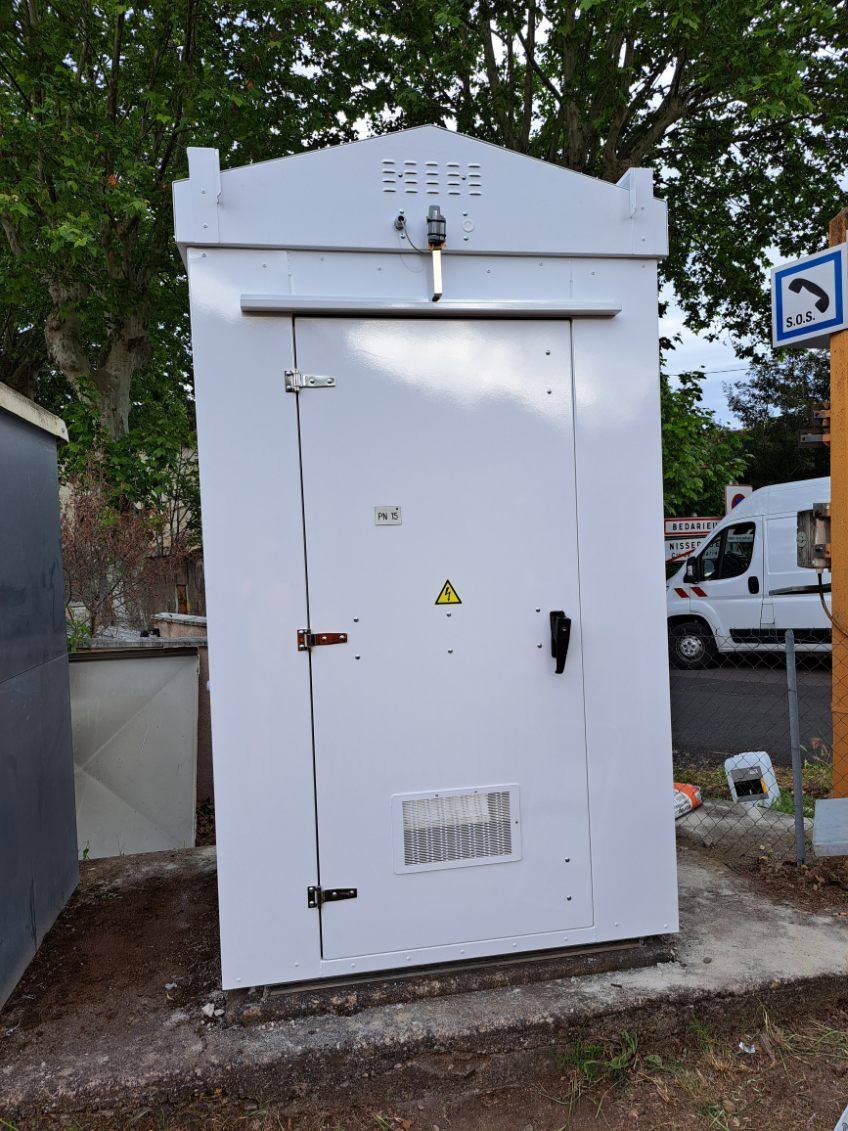
This is an illustrative engineering use case based on documented ALIAS product capabilities. It is not a named customer project, a site-specific design or a performance guarantee.
The delivery challenge
A trackside cabinet requires renewal, but access is restricted to a planned possession or protected working window. The risk is not only the installation duration. Delays can arise from incomplete surveys, unsuitable lifting arrangements, unidentified attachments, base incompatibility or decisions being left until the team reaches site.
The project therefore needs to move uncertainty out of the possession and into the preparation stage.
The planning principle
SafeBox RT has a typical installation time within seven hours, subject to site and operational conditions. That figure is useful for planning, but it is not a guaranteed possession duration.
A credible programme must include access, isolation where required, lifting, removal, interface work, inspection, contingency and handback. The cabinet installation is one part of the complete possession plan.
Work to complete before the possession
- Complete a dimensional and photographic survey of the cabinet, base and surrounding access.
- Confirm the retained equipment and wiring arrangement.
- Resolve cable-entry, gland, ventilation and external-device details.
- Approve the cabinet configuration and base-adaptation plan.
- Confirm lifting points, plant access, working clearances and delivery sequence.
- Pre-assemble and inspect the cabinet and all site-specific components.
- Prepare inspection records, tools, consumables and contingency materials.
- Brief the installation team on responsibilities, hold points and handback criteria.
A practical possession sequence
- Establish the safe system of work and confirm that the site matches the approved survey.
- Protect the existing equipment and remove the old enclosure in accordance with the agreed method.
- Complete any approved base preparation or interface work.
- Position and secure the SafeBox RT cabinet.
- Complete cable-entry sealing, external attachments and ventilation interfaces.
- Inspect doors, hinges, locks, gaskets, filters and roof ventilation features.
- Complete documentation and obtain the required handback acceptance.
Build a realistic contingency
A short possession should not depend on every assumption proving correct. The plan should identify the latest safe decision point for continuing, pausing or reverting to an agreed contingency.
Typical contingencies include unexpected base damage, inaccessible fixings, undocumented external equipment, unsuitable retained components or weather that affects lifting and sealing work.
Protecting the scope
The greatest programme benefit comes from a stable scope. Where the internal equipment and wiring can remain in place, the project may avoid additional disconnection, testing and recommissioning work. Where retention is not suitable, that must be identified early and incorporated properly rather than discovered during the possession.
The installation team should never be expected to make unapproved engineering decisions under time pressure.
Use-case result
This approach turns a nominal seven-hour installation capability into a controlled delivery plan. The target is not an absolute promise of zero disruption; it is a well-prepared replacement with fewer unresolved interfaces at the start of the possession.
Final duration and operational impact remain dependent on the site, the authorised method and the wider railway access arrangements.
ALIAS Engineering
We design and install modular enclosures for signalling, telecom and energy assets across European rail networks. Field notes from our installation teams are published here as they are cleared.