
Use Case: Renewing an Ageing Signalling Cabinet Without Rewiring Existing Equipment
A practical use case for replacing an ageing trackside enclosure while retaining serviceable signalling equipment and existing internal wiring where site conditions allow.
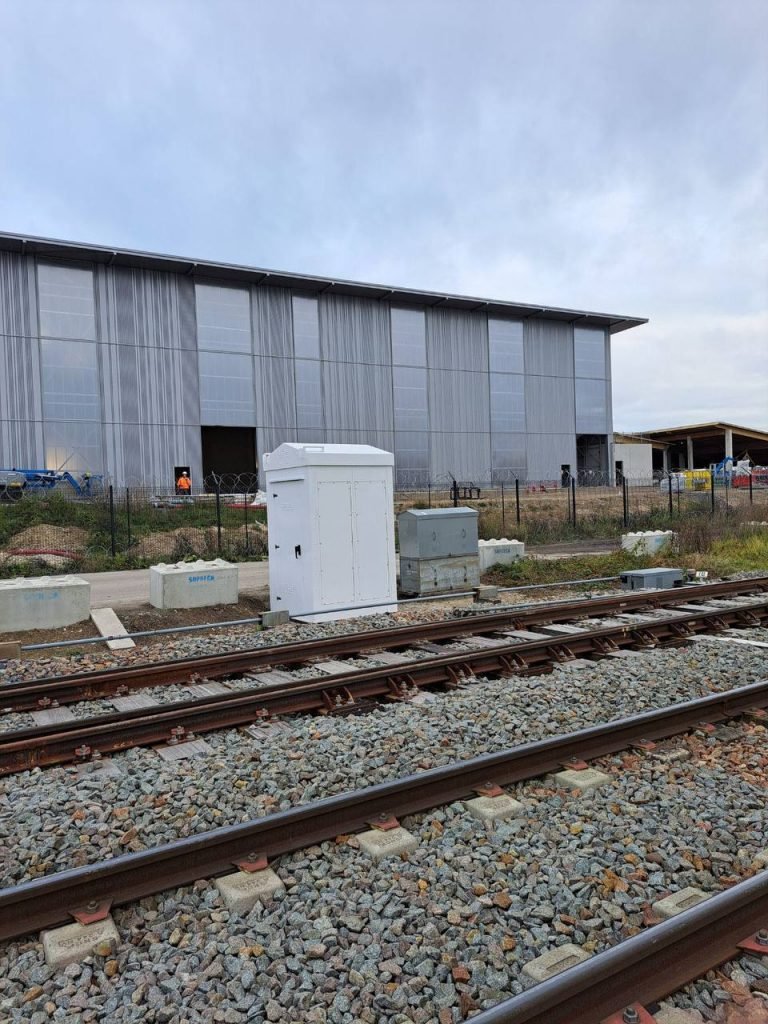
This is an illustrative engineering use case based on documented ALIAS product capabilities. It is not a named customer project, a site-specific design or a performance guarantee.
The site scenario
A signalling location contains serviceable equipment, but the surrounding enclosure is approaching the end of its useful life. The cabinet body shows deterioration, the doors and seals require increasing attention, and the asset owner wants stronger environmental protection without carrying out an unnecessary internal equipment renewal.
The central engineering question is not simply which new cabinet to buy. It is whether the enclosure can be renewed while protecting the integrity of the equipment, wiring, terminations and interfaces already in service.
The project objective
The objective is to replace the external enclosure while retaining existing equipment and wiring where the inspection, design review and installation method confirm that this is appropriate. This approach can reduce the amount of intrusive work inside the signalling system, but it must never be assumed before the site has been surveyed.
Dimensions, cable routes, concrete-base condition, external attachments, access restrictions and maintenance requirements all need to be understood before a replacement configuration is approved.
Why SafeBox RT fits this use case
SafeBox RT is a modular signalling cabinet developed for renewal and new-installation applications. Its replacement method is intended to allow existing equipment and wiring to remain in place where applicable, so the work can focus on the enclosure rather than automatically expanding into a full internal rebuild.
The cabinet provides IP54 protection as standard, with IP65 available as an option when the specified configuration and interfaces require it. Passive thermal regulation is designed so that the internal temperature is no more than 7°C above the external ambient temperature, without relying on power from the equipment inside.
A controlled delivery sequence
- Survey the existing cabinet, base, equipment layout, cable entries, doors, attachments and available working space.
- Confirm which equipment and wiring can remain and identify anything that must be isolated, removed or separately protected.
- Prepare the cabinet configuration, interface details, lifting method, base plan and installation sequence.
- Complete as much fabrication and preparation as possible away from the live site.
- Carry out the replacement within the agreed access arrangements and verify seals, filters, doors, locks and external interfaces.
- Complete inspection, documentation and handover before the asset returns to normal maintenance.
What must be confirmed before installation
- Compatibility with the existing concrete base or the need for an approved base adaptation.
- Condition and suitability of the equipment, wiring and terminations being retained.
- Cable-entry dimensions and sealing requirements.
- Treatment of antennas, sockets, auxiliary boxes or other external devices.
- The required ingress-protection configuration.
- Site access, lifting arrangements and the permitted working window.
- Maintenance access after installation.
Expected project value
The value of this approach is controlled scope. When the retained equipment is suitable and the interface survey is complete, the project can concentrate on renewing the protective enclosure rather than replacing functioning assets simply because the outer cabinet has deteriorated.
SafeBox RT has been used in more than 200 installations on the French railway network since 2018. That operating history supports its use as an established modular renewal concept, while each new site still requires its own engineering review.
When this use case is suitable
This use case is relevant where the internal signalling equipment remains serviceable, the existing arrangement can be surveyed accurately and the replacement can be engineered without compromising safety or maintainability.
It is not a substitute for equipment renewal where internal assets, wiring, foundations or interfaces are themselves defective. Final suitability, specification and installation arrangements must be confirmed through project-specific technical documentation.
ALIAS Engineering
We design and install modular enclosures for signalling, telecom and energy assets across European rail networks. Field notes from our installation teams are published here as they are cleared.