
Use Case: Securing a Remote Telecom or Sensor Cabinet
A use case for protecting remote telecom, sensor or automation equipment where maintenance visits are infrequent and physical attack points must be reduced.
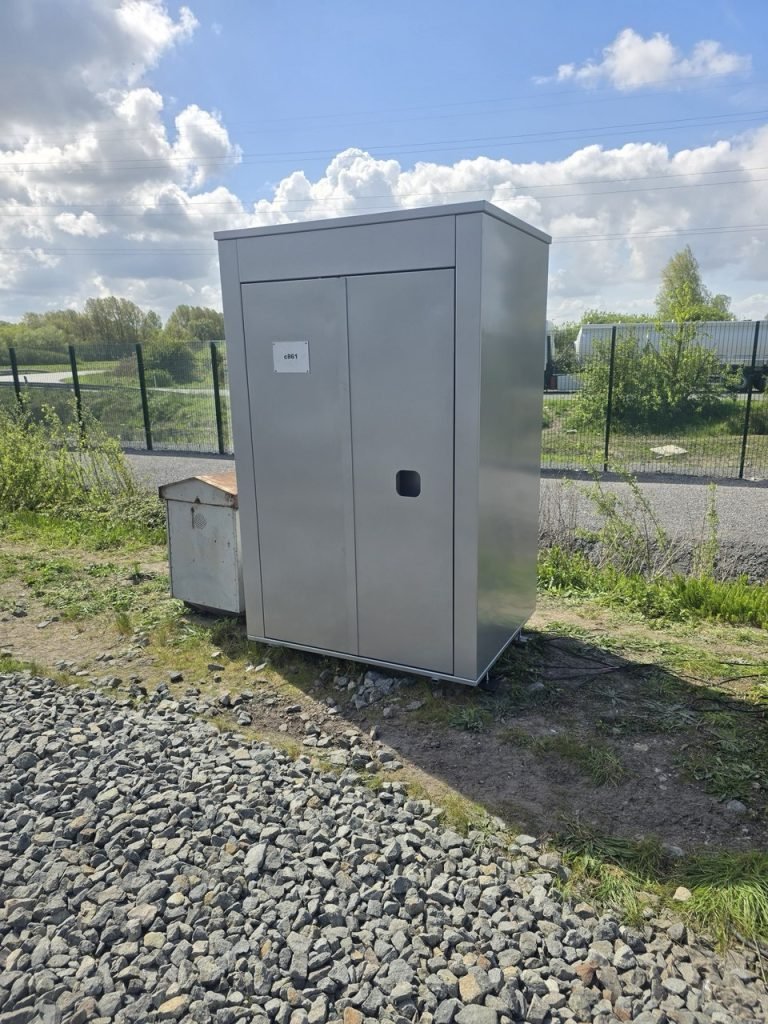
This is an illustrative engineering use case based on documented ALIAS product capabilities. It is not a named customer project, a site-specific design or a performance guarantee.
The remote-site challenge
Remote telecom, sensor and automation sites may operate with limited supervision and only occasional maintenance visits. A conventional cabinet can remain unnoticed after a forced-entry attempt, damaged hinge or failed external fixing until the next inspection.
The enclosure must therefore combine physical protection with a design that can be inspected and maintained efficiently when a technician reaches the site.
Typical asset profile
- Telecommunications or data-acquisition equipment.
- Trackside, roadside, utility or environmental sensors.
- Local automation and control equipment.
- Power supplies and communications interfaces.
- An existing cabinet that remains technically serviceable.
- A site exposed to theft, vandalism or unauthorised access.
Why SafeBox AV is relevant
SafeBox AV is designed to form a reinforced external protection layer around an existing cabinet. Its welded construction, hidden hinges, absence of externally accessible fixings and four-point locking with 25 mm hardened steel bars are intended to reduce obvious points of attack.
C5M corrosion protection supports use in aggressive outdoor environments, subject to the complete project specification and maintenance regime.
Configuration review
The design must consider more than external dimensions. Antennas, ventilation openings, cable entries, solar exposure, maintenance tools and door swing can all affect the final arrangement.
Where ventilation must be reproduced on the protective doors, the opening design should preserve the equipment’s needs without creating an avoidable security weakness.
Installation and authorised access
A typical SafeBox AV installation is approximately four hours, subject to site and operational conditions. Remote-site logistics may make delivery, lifting and access more significant than the cabinet fitting itself.
The internal opening device should be reviewed for safe and ergonomic use. The team responsible for future maintenance should understand the unlocking sequence, door restraints, working clearances and any site-specific access controls.
Inspection plan
- Check for attempted entry, impact damage and deformation.
- Test the four-point locking system and inspect the hardened bars.
- Inspect hidden hinge areas and door alignment.
- Check the coating for local damage and repair it using the approved method.
- Confirm that vents and cable interfaces remain clear and secure.
- Review vegetation, ground movement and surrounding access conditions.
- Record changes to external antennas or attached devices.
Use-case conclusion
For a remote site, security and maintainability must be designed together. SafeBox AV can provide a stronger protective envelope around serviceable equipment without automatically requiring a full internal replacement.
The final design should be based on the site threat, environmental exposure, equipment requirements and maintenance model rather than on a generic assumption that one enclosure suits every remote installation.
ALIAS Engineering
We design and install modular enclosures for signalling, telecom and energy assets across European rail networks. Field notes from our installation teams are published here as they are cleared.